How to Choose Orthopedic Drill Bits for Surgical Power Tools
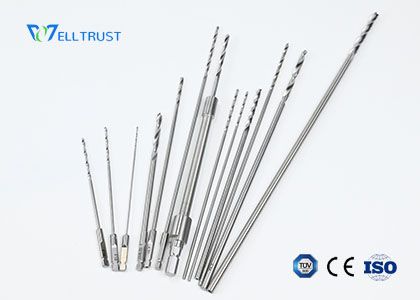
How to Choose Orthopedic Drill Bits for Surgical Power Tools
Orthopedic drill bits are precision accessories used with compatible surgical power tools for controlled bone drilling. Choosing the right bit requires more than selecting a diameter. The drilling task, solid or cannulated design, shank interface, working length, material, sterilization method and matching handpiece all affect whether a configuration is suitable for evaluation.
For hospitals, distributors and medical-device purchasers, a complete drill-bit specification should be reviewed together with the surgical drill system. WTT Tool provides several orthopedic drill-bit configurations, including solid drill bits, cannulated drill bits, small AO drill bits and orthopedic drill-bit sets. This guide explains the main differences and the checks that should be completed before ordering.
What Are Orthopedic Drill Bits?
Orthopedic drill bits are cutting instruments designed to create or enlarge a controlled hole in bone when driven by a compatible surgical handpiece. Their geometry includes a cutting tip, flutes for removing bone debris, a shaft and a connection section that fits the selected drill or attachment.
The appropriate drill bit depends on the intended procedure and the related fixation or instrument system. Drill bits may be evaluated for trauma surgery, spine-related procedures, joint procedures, veterinary orthopedic applications and other bone-preparation tasks. Product suitability must always be confirmed against the current technical documentation and the relevant surgical protocol.
Solid and Cannulated Orthopedic Drill Bits
Solid Drill Bits
A solid drill bit has a continuous body through the cutting section and shaft. It is commonly considered when the drilling technique does not require the bit to pass over a guide wire. Solid drill bits may be selected for pilot-hole preparation and other controlled drilling tasks, provided that the diameter, length, interface and operating conditions match the surgical system.
WTT Tool lists a Stainless Steel AO Quick Coupling Solid Drill Bit for orthopedic trauma surgery. The product page identifies stainless steel construction and an AO quick-coupling configuration. The exact size and compatibility should be confirmed for the selected handpiece and procedure.
Cannulated Drill Bits
A cannulated drill bit contains an internal channel for a compatible guide wire. The guide wire is positioned first according to the applicable surgical technique, and the drill bit is then advanced over the wire. This configuration can help the bit follow an established drilling path during selected trauma and reconstructive procedures.
WTT Tool's Cannulated Orthopedic Drill Bit with Small AO/Round Shank is listed with AO coupling and cannulated-drill-bit attributes. The Small AO Orthopedic Drill Bits page also presents solid and cannulated options. These products should not be treated as interchangeable: the inner channel, guide-wire specification and drilling protocol need to match the intended system.
Key Factors When Selecting Orthopedic Drill Bits
1. Drilling Task and Surgical Application
Start by defining what the drill bit needs to do. A bit for a guide-wire-based technique has different requirements from a bit used for a standard pilot hole. A trauma fixation system, spinal instrument set, joint procedure or veterinary orthopedic system may also require a specific length, diameter, shank or attachment.
Do not select a drill bit solely because its diameter appears correct. The complete combination of bit, handpiece, guide wire, chuck or attachment and fixation system should be checked before procurement.
2. Solid or Cannulated Design
Choose a solid design when the selected technique does not require guide-wire tracking. Choose a cannulated design only when the internal channel matches the guide wire and the compatible handpiece is available. A cannulated bit with an unsuitable inner diameter will not provide the intended configuration, even if its outside diameter is correct.
3. Shank and Interface
The shank must lock securely into the surgical drill or accessory. WTT Tool product pages use terms such as AO quick coupling and round shank for different drill-bit configurations. These terms describe a connection format, but buyers should still verify the exact handpiece model, locking mechanism, shank dimensions and attachment requirements.
4. Diameter and Working Length
The outside diameter affects the size of the drilled channel, while the working length determines the reach of the bit. The selected dimensions should correspond to the planned bone preparation and the relevant implant or instrument system. When a guide wire is used, its diameter and the bit's inner cannulation must also be checked.
WTT Tool lists different size and length options across its orthopedic drill-bit products. Because product pages may describe standard and customized options separately, customers should request the exact size chart and package details for the required model.
5. Material and Flute Geometry
WTT Tool identifies medical-grade stainless steel for several orthopedic drill-bit products. The material should be considered together with cutting-edge design, flute geometry, debris evacuation and the intended operating conditions. A drill bit must be inspected before use for damage, deformation, blockage or abnormal wear.
6. Sterilization and Reprocessing
Several WTT Tool product pages describe their stainless steel drill bits as autoclavable and provide product-specific steam-sterilization information. The precise reprocessing process depends on the exact model, packaging and applicable instructions for use. Product-page information should not replace a facility's validated cleaning and sterilization procedure.
Orthopedic Drill-Bit Comparison
| Selection point | Solid drill bit | Cannulated drill bit |
|---|---|---|
| Central channel | Continuous solid body | Internal channel for a compatible guide wire |
| Typical selection question | Does the drilling task require a standard cutting bit? | Does the technique require the bit to track over a guide wire? |
| Main compatibility check | Diameter, length, shank and handpiece | Guide-wire diameter, outer diameter, length, shank and handpiece |
| Common risk in purchasing | Incorrect connection or unsuitable working length | Incorrect guide-wire fit or incompatible cannulation |
Drill-Bit Sets and Individual Bits
An individual drill bit may be suitable when the required diameter and length are already known. A set can be more practical when a department or distributor needs several sizes for a range of procedures. WTT Tool offers a Stainless Steel Orthopedic Drill Bit Set for surgical power tools, with product-listed AO quick-coupling, round-shank and other interface options.
Before ordering a set, check the included sizes, flute lengths, overall lengths, shank type, case or tray configuration and sterilization instructions. Do not assume that every bit in a set is compatible with every surgical drill. The set should be matched to the equipment platform used by the medical facility.
Accessories That Affect Compatibility
Orthopedic drill bits are part of a larger surgical power-tool configuration. A Jacobs Chuck may be needed for a particular shaft or drilling attachment, while a compatible battery and charger are important for cordless systems. WTT Tool also lists a Surgical Drill Battery Sterilization Channel and an Instrument Sterilization Box for orthopedic drills and saws.
When preparing a purchasing list, include the handpiece, drill bits, chucks or attachments, batteries, charger, sterilization accessories and storage case where applicable. Reviewing the whole configuration can reduce mismatches between the drill bit and the equipment already in service.
Orthopedic Drill-Bit Selection Checklist
- Define the drilling task and intended surgical application.
- Confirm whether the procedure requires a solid or cannulated design.
- Match the inner cannulation to the guide-wire diameter when applicable.
- Confirm the outside diameter, working length and flute length.
- Check the AO, round-shank or other interface against the exact handpiece.
- Review the material, cutting geometry and inspection requirements.
- Confirm cleaning, sterilization and storage instructions for the exact model.
- Request the current specification sheet, package list and compatibility details before placing an order.
Frequently Asked Questions
What are orthopedic drill bits used for?
Orthopedic drill bits are used with compatible surgical power tools for controlled drilling in bone-related procedures. The specific use depends on the drill-bit design, size, handpiece, guide-wire system and applicable surgical protocol.
What is the difference between a solid and a cannulated orthopedic drill bit?
A solid drill bit has a continuous cutting body, while a cannulated drill bit has an internal channel designed to accommodate a compatible guide wire. The appropriate design depends on the planned drilling technique and instrument system.
What does AO quick coupling mean for an orthopedic drill bit?
AO quick coupling refers to a shank and connection configuration intended for compatible surgical handpieces or attachments. Buyers should confirm the exact interface and locking mechanism with the handpiece manufacturer or supplier.
How do I select the correct orthopedic drill-bit size?
Selection should consider the planned drilling diameter, guide-wire diameter when applicable, working length, bone and fixation-system requirements, handpiece compatibility and the current product documentation.
Can orthopedic drill bits be sterilized?
Several WTT Tool product pages describe stainless steel drill bits as autoclavable, including product-specific high-temperature steam specifications. Cleaning and sterilization must follow the current instructions for use for the exact model.
Conclusion
Choosing orthopedic drill bits requires a system-level review. Solid and cannulated designs serve different drilling configurations, while AO coupling, round shanks, diameter, working length, guide-wire fit and sterilization instructions all affect product selection. WTT Tool provides individual drill bits, cannulated options and drill-bit sets for professional medical-device sourcing. Customers should confirm the exact specification and compatibility of each configuration before ordering.
Product information note: This article is provided for product education and purchasing reference. It does not replace professional surgical training, clinical judgment, the applicable instructions for use or the validated reprocessing procedure of the relevant medical facility.


