How to Choose the Right Surgical Saw Blade for Orthopedic Power Tools
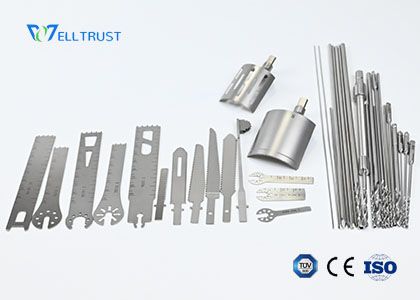
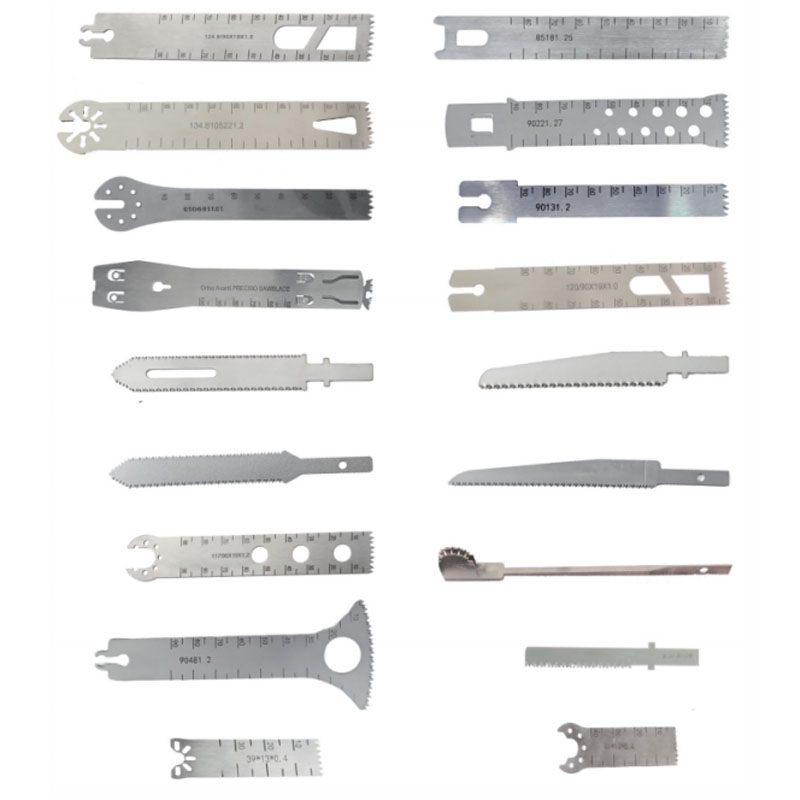
Choosing surgical saw blades requires more than matching a blade to a handpiece. Saw type, attachment, cutting task, geometry and approved interface all affect suitability. The product image shows blades with different lengths, tooth patterns, openings and connection shapes. Because it does not identify every catalogue number, check each blade against the device and manufacturer specification.
Types of Surgical Saw Blades
Reciprocating saw blades move back and forth along a linear path. Oscillating or sagittal saw blades move through a controlled arc at the blade mount. Official Stryker documentation describes sagittal saw systems with dedicated blade mounts, indexing positions and approved blade families. These categories should not be treated as interchangeable simply because both have toothed edges.
Other accessories may include micro or mini saw blades, broad bone-cutting blades, narrow blades and blades designed for a specific attachment or cutting guide. The image shows several such families. Visual grouping is useful for initial review, but it does not replace the product reference or instructions for use.
Key Selection Factors
Size and geometry
Confirm blade length, width, thickness, tooth height and cutting depth. Tooth shape can affect bone engagement and material clearance. Stryker’s official Performance Series information describes beveled edges, constant thickness and different tooth profiles; these are manufacturer-specific features and should not be generalized to every blade.
Tooth pattern and cutting task
Choose the tooth configuration according to the cutting task and compatible power tool. Wider, narrow, fine or coarse-tooth blades may serve different procedural requirements. Selection should be made by trained healthcare professionals using the surgical plan and product documentation.
Connection interface
Inspect the mounting opening, slot, hole pattern, locking surface and blade thickness. Manufacturer instructions may specify a blade mount, center pin, button, lever or lock collar. For example, official Stryker instructions require the blade to be fully inserted and securely retained, followed by a manual check before operation. Similar-looking openings can still have different locking or drive requirements.
Blade Compatibility
Blade compatibility cannot be confirmed by appearance or overall dimensions alone. Check the handpiece model, attachment model, blade reference, connection interface, speed or oscillation rate and manufacturer-approved accessory list. DePuy Synthes instructions state that only specified accessories should be used with the relevant system. Stryker documentation also lists approved blade families for particular handpieces. An FDA recall record further illustrates why dimensional conformity matters: a blade attachment that is out of specification may fail to fit securely.
Inspection and Replacement
Before use, inspect the package, blade, teeth and mounting area for damage, deformation, corrosion, contamination or wear. Install the blade only when the handpiece is stationary, lock it according to the instructions and verify that it is secure. Do not use a damaged or unsecured blade or one that creates unusual vibration or noise. Follow the specific instructions for single-use status, cleaning, sterilization, replacement and disposal.
Well Trust Product Range
Well Trust can provide reciprocating saws, oscillating or mini oscillating saw attachments, related surgical saw blades, batteries, chargers, transfer shields and sterilization boxes. The E100 Multi Function Drill materials also show multiple attachment interfaces. When requesting a blade or accessory, provide the power-tool model, attachment type, blade dimensions, connection style and intended application so Well Trust can confirm the available configuration against the relevant documentation.
Frequently Asked Questions
Can surgical saw blades be exchanged between different power tools?
Not automatically. Compatibility depends on the handpiece, attachment, mounting interface, speed, operating mode and approved accessory list. Confirm the exact device model and instructions for use before use.
How can I confirm a blade interface?
Check the power-tool model, attachment model, blade reference or catalogue number, mounting shape, locking method and manufacturer documentation. Do not rely on appearance or overall dimensions alone.
How should I choose a blade specification?
Select the saw type first, then confirm blade length, width, thickness, tooth pattern, application, interface and approved compatibility. Follow the current instructions for use and facility procedures.


